
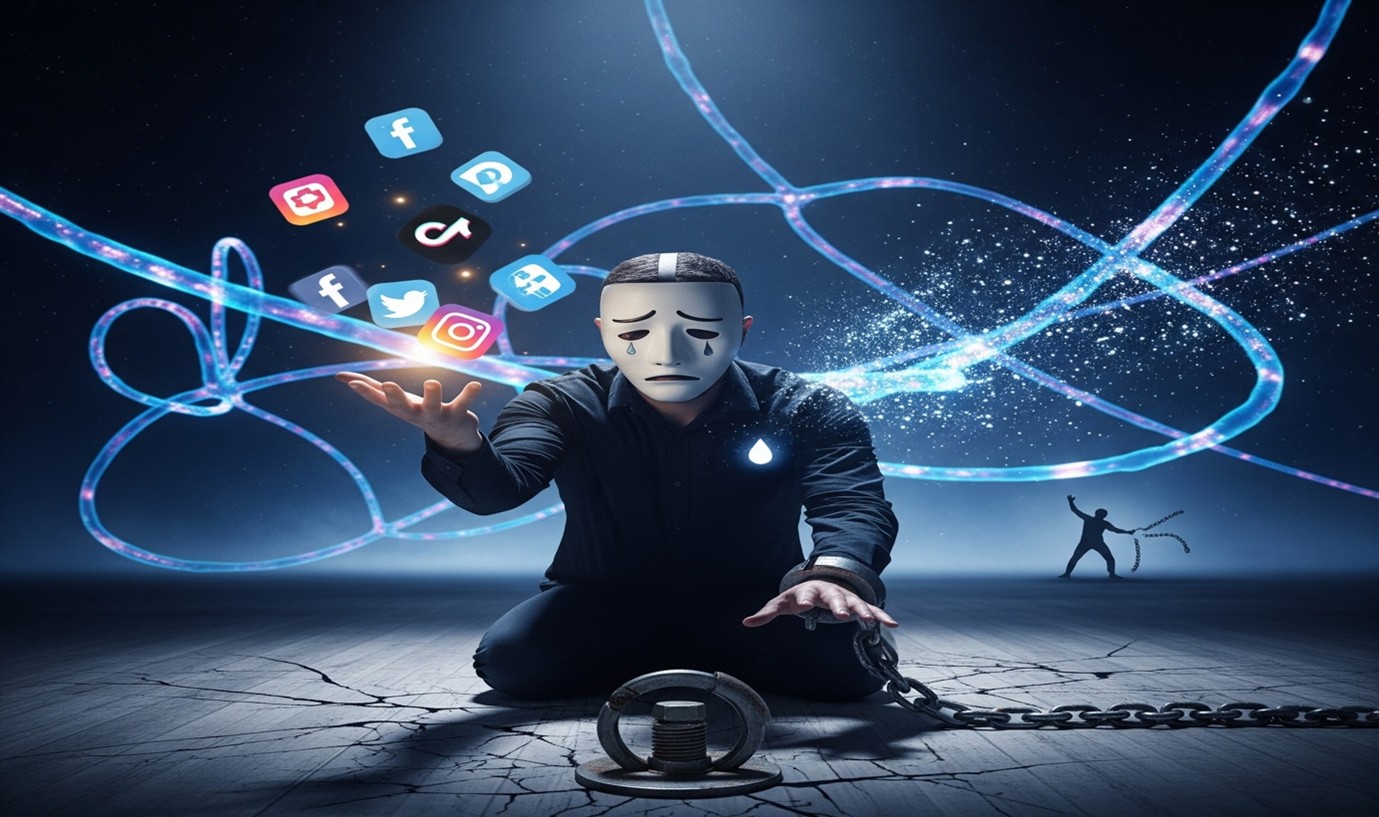
Modern psychology promised healing, but we’ve inadvertently cultivated perpetual victimhood. What began as rightful recognition of trauma’s impact has morphed into something far more dangerous: the commodification of pain for social capital and economic gain.
The Commodification of Pain
The trauma industry has exploded into a $2.85 billion global market by 2025, with the PTSD treatment segment alone growing at 4.1% annually. Social media amplifies this phenomenon exponentially. Recent research shows that 87% of Gen Z users report that social media negatively affects their mental health, with 83% feeling pressured to be perfect online [1]. The digital age has transformed vulnerability into currency, rewarding public displays of suffering with likes, shares, and followers.
The proliferation of trauma-informed everything—from somatic therapy (now a $4.01 billion market projected to reach $12.40 billion by 2032) to workplace policies—creates perverse incentives to remain wounded. As one 2025 study revealed, 58% of young people have experienced cyberbullying, yet platforms continue to reward victimhood narratives without meaningful resolution [2].
The Neuroscience of Victimhood
Harvard’s McLean Hospital research demonstrates that rumination—endless rehearsal of negative experiences—strengthens neural pathways associated with depression and anxiety through “negative neuroplasticity”. Groundbreaking 2025 neuroplasticity research from Harvard shows that adolescents with higher trait rumination exhibit lower gray matter density in brain regions crucial for executive functioning and inhibitory control [3].
The study found that rumination correlates with reduced gray matter in the left orbitofrontal cortex, inferior frontal gyrus, and dorsolateral prefrontal cortex—areas essential for emotional regulation and cognitive control. Paradoxically, our therapeutic culture encourages exactly this destructive pattern through “trauma work” that excavates pain rather than builds resilience.
Dr. Richard McNally’s Harvard research reveals trauma memories are often reconstructed rather than recovered, meaning therapeutic excavation can create false memories while strengthening real ones [3]. The popular notion that “the body keeps the score” has been weaponized to suggest every physical sensation indicates trauma, leading to misdiagnosis of normal stress responses.
The Victim Hierarchy
The most insidious aspect of victim culture is its competitive structure. Research identifies four key dimensions of victimhood mentality: constantly seeking recognition, moral elitism, lack of empathy for others’ suffering, and frequent rumination about past victimization [4].
This creates “Oppression Olympics”—a term coined by Chicana feminist Elizabeth Martínez in 1993—where individuals compete for who has suffered most. Recent 2025 studies show that members of perceived victim groups prefer different levels of abstraction when discussing their experiences, with victims seeking more concrete, detailed accounts of their suffering [5].
The hierarchy operates through intersectional scoring systems where trauma points determine social standing. Those who genuinely overcome adversity often find themselves ostracized because healing threatens the victim ecosystem that provides meaning and community for those trapped in therapeutic dependency.
Economic Incentives and Market Growth
The numbers tell a stark story. The global trauma care centers market reached $18.74 billion in 2025 and is projected to hit $36.24 billion by 2034, growing at 7.6% annually. In India alone, PTSD treatment market generated $44.4 million in 2024 and expects to reach $67.9 million by 2030 [6].
This economic juggernaut includes endless therapeutic modalities—EMDR, somatic experiencing, sensorimotor psychotherapy—that generate revenue streams dependent on maintaining, not resolving, psychological distress. Universities now produce graduates whose career prospects depend on discovering new forms of trauma and expanding victim populations.
Mental health issues cost the global economy $1 trillion annually. Yet rather than focusing on genuine recovery, the system incentivizes prolonged treatment cycles. Insurance companies now reimburse “trauma therapy” indefinitely, removing economic pressure for therapeutic efficiency [7].
The Recovery Resistance
Perhaps most disturbing is active resistance to recovery within victim communities. Social media research shows that individuals with childhood trauma exhibit higher social media addiction, using platforms to maintain their victim narratives. Online support groups often become echo chambers that discourage healing attempts as “invalidating” or “toxic positivity.”
This creates what psychologists term “secondary trauma benefits”—psychological, social, and economic advantages that unconsciously motivate maintenance of victim status. Research demonstrates that 45% of young people worry they’re addicted to social media, yet platforms continue rewarding vulnerability performances [8].
The Social Media Amplification
The digital landscape has fundamentally altered how trauma is processed and performed. Studies show 67% of trauma-related TikTok videos feature individuals recounting severe experiences like child abuse and violence, yet only 3.7% include trigger warnings. The algorithm rewards emotional content, creating incentives for trauma performance rather than healing.
Recent findings reveal that 38% of social media users want to permanently change their bodies through surgery, while 82% report negative body image impacts. The platform economy transforms personal suffering into content, with vulnerable individuals becoming unwitting performers in their own victimization narratives [9].
Breaking the Cycle
We must restore trauma to its proper context: a genuine psychological injury requiring treatment, not an identity to be perpetually performed. Neuroplasticity research shows the brain’s remarkable capacity for positive change—but only when we focus on building resilience rather than excavating wounds.
The therapeutic industry must shift from endless processing to outcome-focused interventions. Evidence shows that happiness increases productivity by 13%, yet our current system rewards prolonged dysfunction over recovery [7].
Real trauma deserves real treatment. Genuine victims need genuine healing. Yet when pain becomes performance, suffering becomes currency, and victimhood becomes identity, we all lose. It’s time to choose healing over hierarchy, resilience over rumination, and recovery over endless therapeutic dependency.
The path forward requires courage: to heal rather than perform, to build rather than excavate, and to celebrate recovery as the ultimate act of resistance against the victim culture epidemic.
References
- https://www.grandviewresearch.com/industry-analysis/post-traumatic-stress-disorder-treatment-market-report
- https://www.coherentmarketinsights.com/industry-reports/somatic-therapy-market
- Joss D, Tierney AO, Pidvirny K, Jaffe NM, Goodman H, Carson NJ, Schuman-Olivier Z, Webb CA. Neural propensity for trait rumination in adolescents: A cross-sectional study with Voxel-Based Morphometry. J Mood Anxiety Disord. 2025 May 1;11:100125. doi: 10.1016/j.xjmad.2025.100125. PMID: 40657354; PMCID: PMC12244089.
- https://www.scientificamerican.com/article/unraveling-the-mindset-of-victimhood/
- Pesin-Michael G, Shnabel N, Steffens MC, Wolf T. A needs-based level of construal: Members of perceived victim and perpetrator groups prefer to represent transgressions at different levels of abstraction. J Pers Soc Psychol. 2025 Apr;128(4):864-886. doi: 10.1037/pspi0000489. PMID: 40257911.
- https://www.precedenceresearch.com/trauma-care-centers-market
- https://www.spill.chat/mental-health-statistics/workplace-mental-health-statistics
- https://en.wikipedia.org/wiki/Victim_mentality
- https://www.cybersmile.org/2025/06/20/how-social-media-affects-gen-z-digital-wellbeing-2025-report/
- Jaffal SM. Neuroplasticity in chronic pain: insights into diagnosis and treatment. Korean J Pain. 2025 Apr 1;38(2):89-102. doi: 10.3344/kjp.24393. PMID: 40159936; PMCID: PMC11965994.
(Authors of the above article are Dr. Raul Villamarin Rodriguez, Vice President, Woxsen University, Hyderabad, India & Dr. Hemachandran K, Director of AI Research Centre, Woxsen University, Hyderabad, India)

This is a powerful exploration of how trauma can sometimes shift from being an experience to becoming an identity. I appreciate the balanced perspective—acknowledging the importance of validating pain while also cautioning against the risks of staying stuck in victimhood. The discussion about resilience and reclaiming agency is especially meaningful, offering readers a constructive path forward. A very insightful read!