
Have you ever wondered why eating disorders are so often misunderstood?
Do you know someone who is facing this?
Especially during adolescence, many young people feel uncomfortable in their changing bodies and worry about gaining weight. While these concerns can be common during the growing years, they are not the same as having an eating disorder. Today, let’s talk about Anorexia Nervosa, one of the most serious eating disorders. Anorexia nervosa is a condition in which a person believes they are overweight even when they are not. Although it may seem like an intense focus on food, calories, or body weight, the disorder is deeply rooted in underlying emotional and psychological struggles.
Anorexia nervosa is characterised by severely restricted food intake, often leading to extreme weight loss or malnutrition. Despite being underweight, the young person may view this as a success rather than a problem and may have little motivation to change. The disorder most commonly begins during adolescence, typically between the ages of 14 and 16. While many individuals with anorexia nervosa are underweight, it is important to note that a person can be of any body size and still experience this disorder. An intense fear of gaining weight and a distorted body image remain core features of anorexia nervosa, regardless of outward appearance.
What Are The Causes of Developing Anorexia?
There is no single cause of eating disorders. Instead, they develop due to a complex interaction of biological, psychological, and social factors, especially during emotionally vulnerable stages like adolescence.
- Genetic predisposition: Some individuals may be biologically more vulnerable to developing an eating disorder.
- Personality traits: Traits such as perfectionism, rigidity, or a strong need for control can increase risk.
- Emotional challenges: Stress, anxiety, low self-esteem, or unresolved emotional distress may lead to disordered eating as a coping mechanism.
- Societal and cultural influences: Unrealistic beauty standards and appearance-focused messaging shape beliefs about body image, food, and self-worth.
- Family environment: Ongoing conflicts at home or high parental expectations can contribute to emotional strain.
- Academic and societal pressure: Performance-related stress and external expectations can lead to emotional dysregulation in young adolescents.
How to Know That Someone Is Suffering from an Eating Disorder?
Identifying an eating disorder during adolescence can be particularly challenging, as dietary changes and experimentation with exercise are often seen as a normal part of growing up. However, certain patterns and behaviours may signal a deeper concern and should not be overlooked.
- Restrictive eating behaviours: Skipping meals, eating very small portions, or avoiding entire food groups.
- Excessive or compulsive exercise: Engaging in intense physical activity driven by guilt or fear rather than enjoyment or health.
- Distorted body image: Appearing visibly thin yet repeatedly expressing fear of being overweight or “fat.”
- Serious physical health risks: Prolonged restriction can lead to malnutrition, weakness, hormonal imbalances, and severe medical complications.
- Cardiac and organ-related concerns: In severe cases, anorexia can damage the structure and functioning of the heart, increasing the risk of organ failure.
- Impact on development: The effects are particularly harmful in children and adolescents, as the disorder disrupts normal physical growth and social and emotional development.
Emotional and psychological symptoms may include:
- Mood changes: Persistent feelings of depression, anxiety, irritability, or emotional numbness.
- Rigid or “black-and-white” thinking: Viewing foods as strictly “good” or “bad.”
- Low self-esteem: Constant self-criticism and dissatisfaction with one’s body or abilities.
- Fear of eating in public: Avoiding meals with others or social situations involving food.
- Preoccupation with food and exercise: Constant thoughts about calories, weight, body shape, or workout routines.
- Conditional self-worth: Believing happiness, success, or acceptance is only possible at a certain weight or body size.
- Critical attitudes toward others: Judging or criticizing others’ bodies or eating habits.
How to Treat Anorexia Nervosa, viz., Eating Disorder?
Anorexia can be difficult to treat. It requires specialist treatment, which should involve the family, particularly if the patient is a teenager. Re-feeding may be done voluntarily by having the person eat regular meal plans developed by a dietician, or may be done involuntarily via a nasogastric tube. Re-feeding is essential to help the young person to get well enough to think straight and participate in getting well. No medications are effective for anorexia. Having understood the dynamic nature of anorexia nervosa, it requires a collaborative approach. It is best treated by a multidisciplinary team of professionals. This means that the person will need to see more than one professional, ideally including:
- A doctor or GP to provide medical treatment and monitor general health;
- A psychologist or psychiatrist to provide mental health treatment or therapy; and
- Dietitians or nutritionists can help the person to either gain or lose weight and learn healthy eating habits.
Psychotherapy for Anorexia Nervosa – How Can It Help?
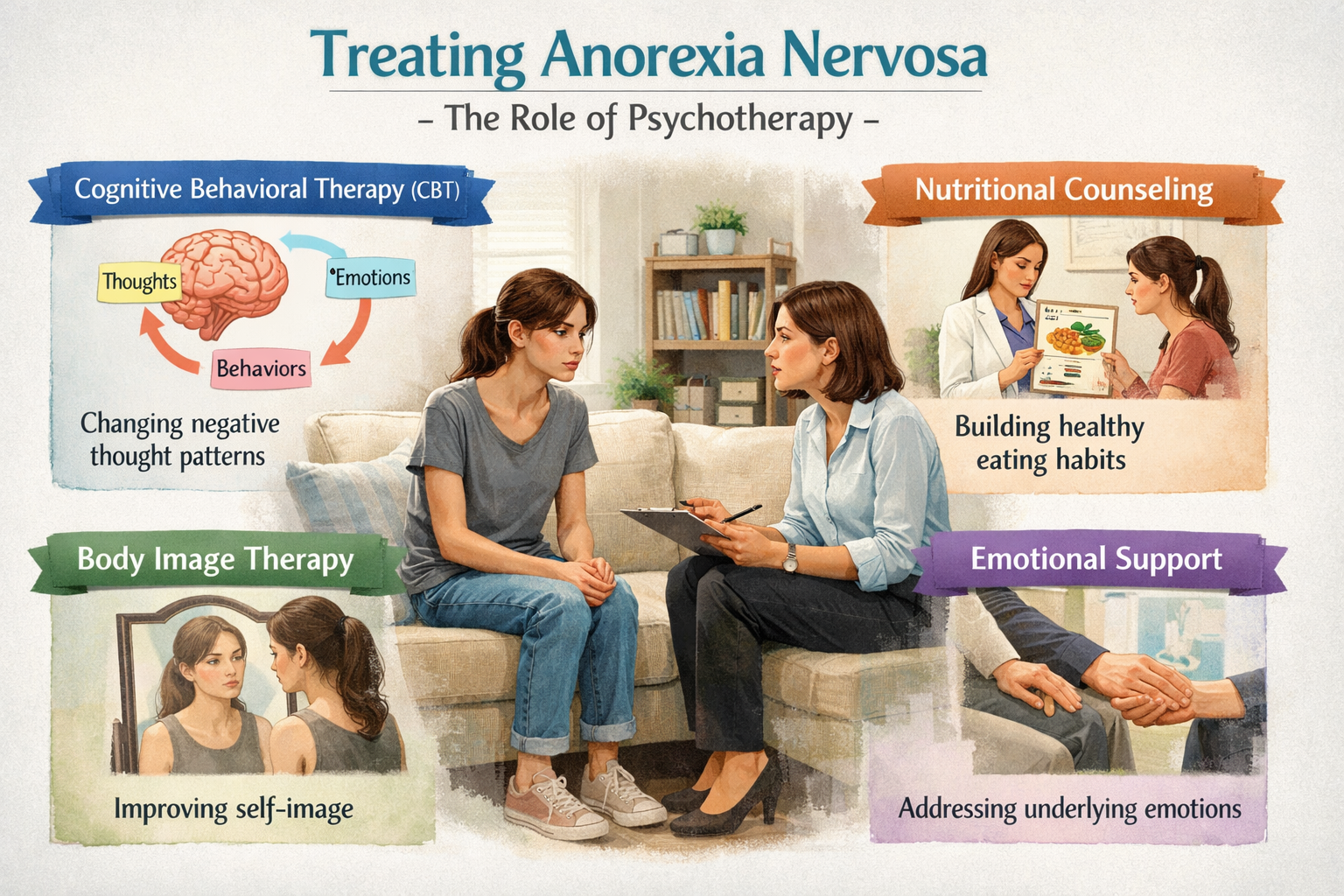
Psychotherapy for anorexia nervosa usually addresses the mental and emotional patterns that often aggravate symptoms of anorexia. As a mental health support and care provider in India, Mpower, one of the best mental health companies in India, provides treatment for anorexia, which includes psychotherapy. Psychotherapy for anorexia can also help a person develop healthier coping mechanisms. Anorexia Nervosa Treatment focuses on understanding and managing triggers that can contribute to aggravating the condition. While nutritional rehabilitation is crucial, long-term recovery depends on psychological healing, and psychotherapy for anorexia nervosa usually focuses on that. A lot of individuals with anorexia nervosa struggle with distorted body image beliefs. Therapy can help individuals challenge these beliefs and rework their body image ideals. Anorexia Nervosa Treatment also works through trauma or perfectionism that often underlie the disorder.
Psychotherapy for Anorexia Nervosa is central to recovery as it adopts a wholesome approach focusing on the physical, emotional, and psychological well-being of a person. Medical and nutritional care might help a person recover physically; however, an impactful and lasting recovery might stem from mind healing. Our mind and body are connected; thus, a wholesome approach might be better for recovery. It’s not just about not eating or food, but it’s often about control, perfectionism, low self-esteem, trauma, or emotional pain. It also focuses on relapse prevention. Psychotherapy for anorexia helps people recognize triggers, understand their patterns, and develop tools to prevent relapse. It helps rebuild a sense of self outside of the eating disorder and encourages self-compassion.
Further, anorexia treatment works extensively, right from the initial psychological assessment to giving a personalized treatment plan. It works on building a safe and stigma-free environment. It also incorporates holistic care, including mindfulness, art therapy, and body image work.
Cognitive Behavioural Therapy (CBT-E) for Anorexia Nervosa is a type of psychotherapy used to help people identify links between their thoughts, feelings, and behaviours to overcome unhelpful thinking patterns and modify behaviours. CBT-E therapy is time-limited. CBT-E for Anorexia Nervosa helps one understand the interplay between one’s thoughts, feelings, and behaviours. It further focuses on developing strategies to change unhelpful thoughts, feelings, and behaviours with the end goal to improve mood and physical symptoms. Along with CBT-E for Anorexia Nervosa, there is Family-Based Therapy for Eating Disorders. In adolescents, especially, therapies like Family-Based Treatment (FBT) involve loved ones, which can create a supportive home environment and improve recovery outcomes.
Conclusion:
Anorexia Nervosa Treatment requests a holistic approach to treatment. It can provide help through in-person counseling sessions, online counseling via phone or video call, or it can also assist individuals through its app. Anorexia Nervosa Treatment should also encourage peer support and shared healing. It meticulously focuses on the gradual reintroduction of healthy behaviours. It also makes aftercare and relapse prevention plans, as relapse is commonly seen in anorexia nervosa. One can rest assured while opting for Anorexia Nervosa Treatment at a mental health care provider, as it has experts in treating eating disorders. The therapists often adopt a compassionate approach and practice trauma-informed care. The therapy programs are designed for individual needs with an integrated therapy approach.
Recovery from anorexia is rarely linear, but with the right support system and a tailored therapeutic approach, healing is possible. The focus is on not just surviving anorexia, but truly thriving beyond it.